What a high-risk pregnancy means
A pregnancy is called high risk when you or your baby have a greater chance of health problems than usual, before, during or after birth. The label is not a prediction that something will go wrong. It simply means you need closer watching and sometimes care from a specialist team. With regular follow-up, many women with a high-risk pregnancy go on to deliver healthy babies.
Your doctor may use the term at your first visit, or later if a new problem shows up. The risk level can also change as the months pass.
What can make a pregnancy high risk
Health conditions you already have
- high blood pressure, diabetes, thyroid disease or kidney disease
- heart disease, epilepsy or autoimmune conditions such as lupus
- severe anaemia, thalassaemia or sickle cell disease
- obesity or being very underweight
Your age and pregnancy history
- being younger than 18, or 35 and older
- an earlier caesarean or other surgery on the uterus
- repeated miscarriages, a stillbirth or a baby born too early
- pregnancy after a long course of fertility treatment
Problems that appear during pregnancy
- diabetes that starts in pregnancy, known as gestational diabetes
- high blood pressure with protein in the urine, known as pre-eclampsia
- twins or triplets
- a low-lying placenta, or too much or too little fluid around the baby
- a baby that is growing slowly, or a condition seen on scan
- Rh-negative blood group in the mother with an Rh-positive baby
How care differs from routine pregnancy care
You still have all the usual check-ups described under pregnancy care and delivery. On top of these, your doctor adds visits and tests that match your condition. Some examples are shown here.
| Condition | Extra monitoring often used | Main aim |
|---|---|---|
| High blood pressure | Frequent pressure checks, urine and blood tests | Detect pre-eclampsia early |
| Diabetes | Home sugar checks, diet plan, growth scans | Keep sugar in the target range |
| Twins | More frequent scans and visits | Watch growth and early labour |
| Slow growth of baby | Doppler scans, heartbeat tracing | Time the delivery safely |
| Low-lying placenta | Repeat scans, advice on bleeding | Plan the type of birth |
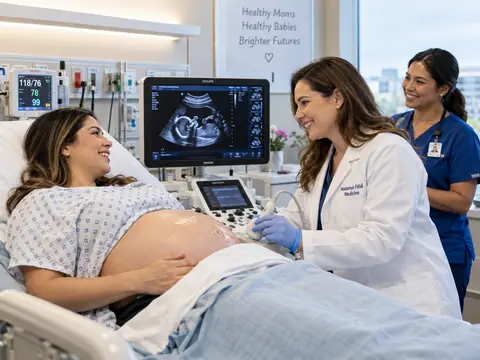
A detailed ultrasound scan, sometimes with Doppler to study blood flow, is one of the main tools. Your obstetrician may also involve a fetal medicine specialist, physician, endocrinologist, cardiologist or newborn specialist.
What to expect at a high-risk visit
- A nurse records your weight and blood pressure and tests your urine.
- The doctor reviews your home readings, such as sugar or blood pressure charts, and asks about the baby's movements.
- Your abdomen is examined to judge the baby's size and position, and the heartbeat is heard.
- Scans or blood tests are done or booked if they are due.
- Medicines are reviewed. Some are changed because they are not suitable in pregnancy. Never stop or start a medicine on your own.
- You are told the date of the next visit and which symptoms should bring you in sooner.
Visits are often every one to two weeks in the later months. A short hospital stay for observation is sometimes advised.
What you can do at home
- Keep every appointment, even when you feel fine.
- Take prescribed medicines and supplements at the same time each day.
- Record blood pressure or sugar readings if you have been asked to, and carry the chart to each visit.
- Count your baby's movements daily in the last three months, in the way your doctor has shown you.
- Eat balanced meals and follow any diet plan given for diabetes or blood pressure.
- Rest when you are tired, but do not stay in bed all day unless you have been told to.
- Avoid tobacco and alcohol completely.
- Keep your reports, blood group card and the hospital phone number in one place.
If you live far from the hospital, discuss early where you would stay near your due date and how you would reach the hospital at night. Worry is natural. Share your fears with your doctor and family, and ask for counselling if anxiety or low mood is affecting your sleep.
Planning the birth
Where you deliver matters. Doctors usually advise a hospital that has an operation theatre, a blood bank or blood storage, and a newborn intensive care unit available round the clock. Ask about this early so that you are not travelling far in an emergency.
A high-risk pregnancy does not always end in a caesarean. Many women deliver vaginally. The timing and method depend on your condition and the baby's wellbeing, and the doctor decides after discussing it with you. If an early birth is likely, steroid injections may be given to help the baby's lungs mature. Costs vary by city, hospital and how much monitoring is needed. After delivery, some conditions need continued checks as part of postnatal care.
When to see a gynecologist immediately
Go to your hospital at once, day or night, if you notice:
- vaginal bleeding or leaking of fluid
- a severe headache, seeing spots or flashing lights, or pain just below the ribs
- sudden swelling of the face, hands or feet
- regular tightening or pain before 37 weeks
- reduced or absent movements of the baby
- breathlessness, chest pain or a racing heartbeat
- high fever, or very high or very low sugar readings
- fits or loss of consciousness
This page is general information for readers in India. It is not medical advice. Speak to a qualified gynecologist about your own health.